When we decided to move to Spain, we knew we wanted to buy a house rather than rent. We normally would always recommend renting for a year in an area before buying and it’s what we have done every time we moved to a new area, but this time we already knew where we wanted to be. There were definitely some things we weren’t expecting though. Here are 6 things I wish I knew before buying a house in Spain.

1. There Is No Central MLS System For Buying A House In Spain
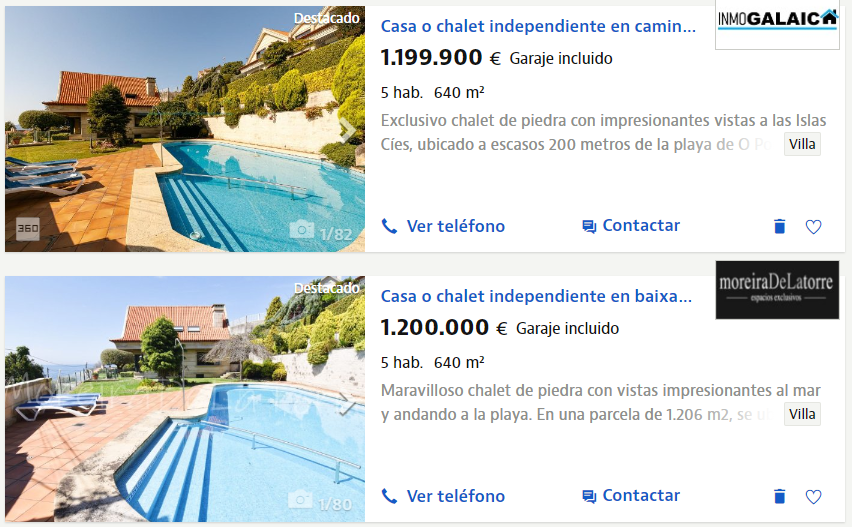
Unlike the United States, Spain does not have a centralized Multiple Listing Service where all realtors list their properties and they have access to other listings other than their own. The closest thing you will find to a national MLS system is Idealista, where most realtors will publish their listings. In fact, it’s not uncommon to find the same property listed many times by different agencies on Idealista. These listings will even be listed with different prices and the realtors compete to sell it first. Below is an example of a property listed on Idealista by two different agencies with different prices.
2. Buyer’s Agents Are Non-Existent
In the United States, you typically have a buyer’s agent and a seller’s agent. The seller pays the realtor costs, typically about 6% of the purchase price. If there is a buyer’s agent and a seller’s agent, which is quite common, the commission is split between the agents.
It does not work this way when buying a house in Spain. You normally have to go to the agency that owns the property listing and purchase from them. Buyer’s agents are rare and definitely not common practice in Galicia where we bought our house.
In areas that have a large number of expats, you might be able to find a buyer’s agent, lawyer, or other relocation specialist to help you find a house or property to buy, but you will typically pay for their services.
3. Non-residents Have To Put More Money Down If They Want A Mortgage
As a expat buying a house in Spain, be prepared to pay an additional 10-20% up front. Banks will only finance 60-70% of the purchase price to a non-resident vs 70 -80% if you are a Spanish resident or Spanish citizen. We had to put 40% down to secure our mortgage but it made sense to us to use our existing US based income to make the purchase before we officially moved to Spain.
4. You Need To Budget An Additional 15-20% Of The Purchase Price In Closing Costs
The costs of buying a house in Spain are typically paid by the buyer. Unlike in the United States, it is unlikely you will be able to roll these expenses into your mortgage, so plan for an additional 15-20% of your purchase price as a cost to consider upfront. All in, our closing costs were about 13% of our purchase price.
If you are buying a new construction home you will also be subject to IVA (sales tax). This is important when you are setting your budget. Below are some average figures you can expect at time of closing.
- Existing Properties: Property Transfer Tax 6-10%
- New Properties: VAT or IVA at 10%
- Notary Costs, title deed tax and land registration fees 1-2.5%
- Legal fees 1-2% (including VAT)
5. Virtual Closings Are Not Possible
Someone has to be physically present at time of closing. Since we were back in the United States and did not plan to travel to Spain around the time of closing, we each had to get a Power of Attorney (POA) done at our local consulate and send the POA via mail to a family member so they could sign for us. This ran us about $150-$200 including mailing the POA.
If you don’t have a family member or friend that can serve as your appointee in Spain, consider hiring a lawyer to represent you and handle the transaction. I would encourage you to get a power of attorney done while you are in Spain exploring properties. This will save you some money and time.
If you are buying a house in Spain remotely, you can have your designated Spanish Consulate put the Power of Attorney Document together for you. We did this easily via email. They sent us a form to complete and the requirements. Once the power of attorney was ready, they called us to schedule an appointment to come in, sign it, and pick it up. You then have to mail it to your chosen representative. We found DHL to be the most economic and most reliable.
6. Building a House in Spain Takes A Long Time
When we first decided to move to Spain, our plan was to build a house. We had 1.5 years before our move, we already had a property, so we thought that would give us plenty of time to find a builder, get permits and get the house built. We started right away talking to builders and they gave us an estimation of 2 years minimum to build a new home, with most saying it would take closer to 3 yrs at least.
I hope you find these helpful. They are definitely, things we wish we had known before buying a house in Spain. It would have saved us some time, energy, and stress. We are super excited to start our new life and share our house with you soon!